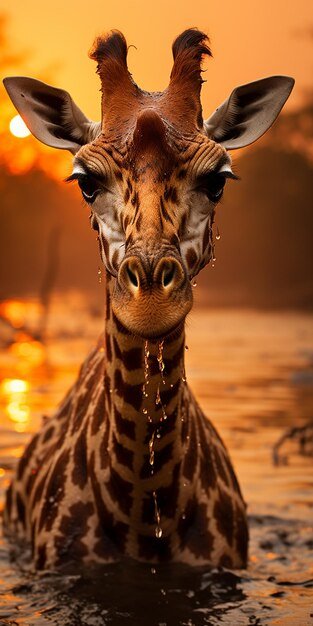
The digital landscape is awash with imagery, but in 2025, a critical question looms over every picture you encounter: Is it real, or was it conjured by artificial intelligence? For journalists, content creators, and platform moderators, accurately Identifying & Attributing AI-Generated Images Correctly isn't just a technical skill—it's foundational to combating misinformation, verifying sources, and upholding trust. The sheer volume of AI-generated content flooding our feeds makes robust detection an essential part of your daily workflow.
This comprehensive guide will equip you with the knowledge and tools to discern synthetic visuals from authentic ones, ensuring you can navigate this complex new reality with confidence.
At a Glance: Your Guide to AI Image Detection
- Why it Matters: AI-generated images are everywhere, impacting trust and fueling misinformation. Detection is crucial.
- The Best Tools: Hive Moderation (highest accuracy, model ID), AI or Not (deepfake specialist), Illuminarty (localized heatmap).
- Manual Red Flags: Look for unnatural lighting, distorted features (hands, faces), blurry text, and repetitive patterns.
- Beyond the Tools: Utilize metadata analysis, reverse image search, and cross-referencing sources.
- Workflow Wisdom: Combine tools strategically for content verification, deepfake detection, and research.
- Beware Limitations: False positives/negatives exist; always integrate human judgment and context.
- Stay Sharp: Tools evolve rapidly. Continuous learning is key.
The New Reality: Why AI Image Detection Matters Now More Than Ever
Imagine a news cycle where every viral image could be a sophisticated fabrication, indistinguishable to the untrained eye. That's not a dystopian future; it's our present. AI-generated images are no longer the crude, six-fingered anomalies of yesteryear. Today's generative models produce stunningly realistic, often photorealistic, visuals that seamlessly blend into legitimate content. For anyone tasked with curating, publishing, or verifying information, the stakes are incredibly high. Misattributing an AI image as real, or vice-versa, can erode credibility, mislead audiences, and even incite real-world consequences. This isn't just about spotting a fake; it's about understanding its origin and purpose.
Beyond the Naked Eye: How AI Image Detection Tools Work
You might wonder how a computer can "see" what a human cannot. It’s all about the subtle, often invisible, footprints AI models leave behind. Generative AI systems, like Midjourney or DALL-E, don't just create images; they learn and replicate patterns. In doing so, they imprint unique "fingerprints" onto the pixels.
Detection tools operate by analyzing these minute details:
- Pixel-level patterns: AI models tend to generate pixels with certain statistical regularities or distributions that differ from real-world photography.
- Compression artifacts: Real images undergo various compression cycles (e.g., JPEG saves) which leave specific traces. AI images, especially pristine ones straight from a generator, may lack these or show different ones.
- Model-specific signatures: Each AI model has its own "style" or underlying architecture, leading to distinct, often microscopic, anomalies. Think of it like a unique brushstroke that only another trained eye can identify.
These tools employ advanced machine learning, often deep neural networks, trained on vast datasets of both authentic and AI-generated images. This training allows them to spot even the most imperceptible tell-tale signs, even after an image has been cropped, resized, or filtered.
Your Essential Toolkit: Leading AI Image Detection Tools in Detail
No single tool is a magic bullet, but a combination of specialized platforms forms a powerful defense. Here are the leading contenders you need to know, how they work, and when to deploy them.
Hive Moderation: The Gold Standard for Accuracy and Model ID
When accuracy is paramount, Hive Moderation stands out. It's often considered the industry benchmark for professional applications.
- Unrivaled Accuracy: Boasting an impressive 98-99.9% accuracy rate, Hive is remarkably reliable.
- Deep Model Identification: Beyond simply flagging an image as AI-generated, Hive can often identify the specific AI model used to create it. This includes recognizing outputs from Midjourney (v1-v6), DALL-E (2/3), various Stable Diffusion variants, and Adobe Firefly. This ability to attribute a source model is invaluable for understanding intent.
- Resilience to Manipulation: Critically, Hive maintains its high accuracy even after images have undergone common alterations like cropping, resizing, filtering, compression, or format conversion. This makes it incredibly robust for real-world scenarios where images are often shared and modified.
- Prime Use Cases:
- Journalism and Content Policy: Essential for verifying images before publication or for enforcing platform guidelines.
- Legal & Research: Provides robust evidence for cases involving deepfakes or synthetic media.
- Large-Scale Screening: Its API can process billions of images monthly, making it suitable for major platforms.
- How to Use It:
- Access: Log in to the Hive Moderation platform (web interface or API).
- Upload: Submit the image you want to analyze (JPEG, PNG, WebP are common formats).
- Review Results: Examine the output, which typically includes a confidence score (e.g., 99.5% AI-generated), the identified AI model (e.g., "Midjourney v5"), and sometimes key detection factors.
- Interpret: A high confidence score, especially coupled with model identification, provides strong evidence of AI origin.
AI or Not: Your Deepfake Detective
Specializing in detecting manipulations involving human faces, AI or Not is a crucial tool when you suspect a person in an image might be synthetic.
- Solid General Detection: It offers a reliable 88.89% accuracy for general AI image detection.
- Deepfake Specialization: Its core strength lies in analyzing facial features for tell-tale inconsistencies. It scrutinizes eye reflections, hair rendering, skin texture, and anatomical proportions—areas where AI often still struggles to achieve perfect realism.
- Deep Learning Analysis: Utilizes deep learning to perform pixel-level analysis specifically tuned for human features.
- Prime Use Cases:
- Suspected Face Manipulation: Ideal for images where a person's face seems "off" or too perfect.
- Social Media & Dating Platforms: Useful for verifying profiles or images that appear to be AI-generated portraits.
- Identity Verification & Media Authentication: A critical first line of defense for images containing people.
- How to Use It:
- Access: Navigate to the AI or Not website.
- Submit Image: Upload the image in question.
- Analyze Results: The tool provides a percentage confidence score. Pay close attention if the image contains a face, as its specialized deepfake algorithms will be at play.
- Understand Pixel-Level Analysis: The results are derived from deep learning algorithms examining microscopic details within the image.
Illuminarty: Pinpointing the Pixel's Story
For understanding where AI manipulation has occurred within an image, Illuminarty offers a unique visual approach.
- Localized Detection: While its overall accuracy is around 75%, Illuminarty’s real power is its ability to generate a heatmap overlay. This visual representation highlights specific regions of an image that exhibit AI generation signatures.
- Computer Vision Algorithms: It employs sophisticated computer vision algorithms to scan the image for these localized patterns.
- Prime Use Cases:
- Detecting Partial AI Generation: In composite images, where some elements are real and others are AI-generated (e.g., an AI-generated background added to a real photo).
- Identifying Synthetic Elements: Useful for understanding the extent of AI manipulation, such as an edited region or an object that was synthetically inserted.
- Educational Purposes: Great for demonstrating how AI "looks" in different parts of an image.
- How to Use It:
- Access: Visit the Illuminarty website.
- Upload Image: Submit your image for analysis.
- Review Heatmap: Observe the visual heatmap. Warmer colors (reds, oranges) indicate regions with a higher probability of AI generation, while cooler colors suggest authentic elements.
- Analyze Regional Patterns: This allows you to visually pinpoint manipulated areas, offering insights into the complexity of the image's creation.
The Human Element: Manual Detection Techniques You Need to Know
Even with advanced tools, your trained eye remains an indispensable asset. AI models, while sophisticated, still often betray themselves with subtle (or not-so-subtle) flaws.
- Unnatural Lighting or Shadows: Does the light source make sense? Are shadows cast logically and consistently with the objects and environment? AI frequently struggles with realistic light interaction.
- Distorted or Asymmetrical Features: This is a classic giveaway. Look closely at faces for inconsistencies in eye pupils, earlobes, or teeth. Hands are notorious for AI errors—count fingers, check for strange angles, or fused digits. Accessories like eyeglasses, jewelry, or buttons can also appear warped or asymmetrical.
- Blurry or Warped Text: AI-generated text is often unreadable, garbled, or inconsistently rendered. If there's text in an image, scrutinize it closely.
- Unusual Backgrounds or Objects: AI can blend elements unnaturally, create floating objects, or produce disconnected limbs (e.g., a hand emerging from an impossible angle). Look for logical continuity in the scene.
- Repetition or Cloning Artifacts: In complex scenes, AI might unnaturally repeat textures, patterns, or even entire objects, especially in crowds, foliage, or brickwork.
- Zoom In, Way In: Pixel anomalies, blurry details, or inconsistent textures become far more apparent when you zoom in on the highest quality version of an image.
- Check for Watermarks: Some AI generators embed invisible, faint, or hard-to-remove watermarks. While often subtle, they can be a clear sign.
- Cross-reference Source: Who posted the image? Where did it originate? Is the source credible? Does it appear on multiple platforms with different backstories? This contextual information is critical.
Leveraging Traditional Forensics: Other Detection Methods
Beyond dedicated AI detection tools, several traditional digital forensics techniques can provide supporting evidence.
- Metadata and EXIF Data Analyzers: Tools like ExifTool or Photo Forensics examine the hidden data embedded within an image file. AI-generated images often strip or alter this metadata, or they may contain inconsistencies (e.g., creation dates that don't align with the image's supposed origin) or unusual compression patterns not typical of standard cameras. A missing or suspiciously sparse EXIF data can be a red flag.
- Reverse Image Search: Platforms like Google Images or TinEye allow you to upload an image and find similar ones across the web. If an image has no traceable origin, appears on obscure sites with conflicting captions, or seems to materialize out of nowhere, it increases the likelihood of it being AI-generated. Conversely, finding the same image used in many reputable contexts across time reinforces its authenticity.
- Deepfake and GAN Detection Models (Specialized): While AI or Not covers this well, a broader category of specialized machine learning systems are trained specifically on outputs from Generative Adversarial Networks (GANs)—the technology behind many deepfakes. These are often used in academic or research settings but are becoming more integrated into consumer tools.
Strategic Workflows: Putting It All Together
Effective detection isn't about using one tool; it's about a strategic workflow that combines their strengths.
Content Verification for Journalists & Publishers
This workflow prioritizes accuracy and comprehensive analysis for publication-ready content.
- Primary Analysis with Hive Moderation: Always start here. Upload the highest quality version of the image to Hive. Its superior accuracy and model identification capabilities provide the strongest initial assessment. A high confidence score (e.g., 95%+) coupled with a specific model ID (e.g., "DALL-E 3") offers compelling evidence.
- Secondary Verification with AI or Not (If Borderline): If Hive returns a borderline result (e.g., 60-90% confidence), or if the image contains people, run it through AI or Not. Its different algorithmic approach can provide a valuable second opinion, especially for potential deepfakes.
- Localized Analysis with Illuminarty (for Composites or Uncertainty): If you suspect only parts of the image are AI-generated, or if you want to understand where the AI elements are, use Illuminarty. This is crucial for composite images or when tools give conflicting general detection results.
- Manual Inspection & Context: Regardless of tool results, perform a thorough manual inspection for the red flags discussed earlier. Cross-reference the image's source, claimed provenance, and any available metadata. If you're exploring how to cite AI images, understanding their origin is the critical first step.
Specialized Deepfake Investigations
When the primary concern is a manipulated face or person:
- Initial Screening with AI or Not: Due to its specialized deepfake algorithms, AI or Not is your first stop for images containing people. It excels at scrutinizing facial features.
- Confirmation with Hive Moderation: Follow up with Hive Moderation for an overall AI generation assessment. This can confirm AI presence and potentially identify the specific model that generated the face, or the wider image.
- Regional Analysis with Illuminarty: If you're uncertain whether only the face was manipulated or if the entire image is synthetic, Illuminarty can visually confirm if only the facial region shows AI signatures, or if other elements are also flagged.
- Metadata & Reverse Image Search: For deepfakes, check EXIF data for signs of editing software or unusual timestamps. A reverse image search can reveal if the original face exists elsewhere, untouched.
Research & Analytical Scenarios
For those needing the deepest understanding of AI image origins and tool performance:
- Analyze with All Three: For every image, run it through Hive Moderation, AI or Not, and Illuminarty.
- Compare and Document: Meticulously compare the confidence scores, model identifications, and localized heatmaps. Document the results, noting each tool's strengths and weaknesses across different image types and AI models. This comparative analysis helps you build expertise and refine your judgment. When considering how to cite AI images, this level of detail is invaluable for providing thorough attribution.
Navigating the Nuances: Limitations and How to Handle Uncertainty
Even the best tools aren't infallible. Understanding their limitations is as important as knowing how to use them.
False Positives: Authentic Images Classified as AI
Sometimes, real images can trick detection tools. Be aware of:
- Heavily Post-Processed Photography: Intense filters, extreme color grading, or heavy retouching can sometimes introduce statistical patterns that mimic AI signatures.
- Hand-Created Digital Art/Illustrations: High-quality digital paintings or illustrations can, at a pixel level, share some characteristics with AI-generated art, especially if they are highly stylized or abstract.
- Standardized Stock Photo Processing: Professional stock photography often undergoes standardized editing processes that can, in rare cases, produce patterns that confuse detection algorithms.
- Screenshots/Screen Captures: Images of digital content (e.g., a screenshot of a website or a video game) can have very clean, artificial pixel grids that might register as AI-generated.
False Negatives: AI-Generated Images Missed
Conversely, some AI images can evade detection:
- Novel or Rare AI Models: Detection tools are trained on known AI models. If a new, highly advanced, or obscure model creates an image, it might not be in the tool's training data, leading to a miss.
- Extreme Post-Processing (AI Obscured): If an AI-generated image is then heavily edited, filtered, or altered by a human, these modifications can obscure the original AI fingerprints, making detection difficult.
- Lower Resolution Images: Reduced image quality removes critical pixel data, making it harder for algorithms to find the subtle AI signatures.
- Hybrid Generation Methods: An image that starts as an AI base but is then extensively refined and edited using traditional graphic design software (e.g., Photoshop) can be incredibly challenging to detect, as the human edits might override AI traces. When considering how to cite AI images that have undergone such hybrid processes, attribution becomes even more complex.
When Results Are Unclear: A Journalist's Approach
Uncertainty is part of the game. Here's how to proceed:
- Examine Manually for AI Artifacts: Revert to your human skills. Zoom in, scrutinize details, and look for inconsistencies in lighting, anatomy, or text.
- Check Metadata (But Be Skeptical): While metadata can be modified, its presence or absence can offer clues. Inconsistencies or a complete lack of data are suspicious.
- Consider the Source and Context: Is the image from a verified, reputable source? Does its story align with other facts? An anonymous viral image should always raise red flags.
- Combine Automated Results with Human Expertise: For critical decisions, especially in journalism or legal contexts, never rely solely on a tool's verdict. Use the tools as powerful assistants, but let your seasoned judgment be the final arbiter. When discussing how to cite AI images, transparency about the detection process is key.
Best Practices for Robust Image Verification
Adopting these practices will streamline your workflow and enhance the reliability of your AI image detection efforts.
- Image Quality Preservation: Always try to analyze the highest resolution, least compressed version of an image available. Each time an image is saved, shared, or compressed, valuable pixel data that detection tools rely on can be lost.
- Multiple Tool Verification: For high-stakes decisions—such as publishing a news story, using an image in a legal case, or enforcing content policy—always verify with at least two different detection tools, ideally those with complementary strengths (e.g., Hive and AI or Not).
- Context Consideration is Paramount: Detection tool results are data points, not the full story. Combine these results with all available contextual information: the image's source, its claimed provenance, the creator's reputation, and its intended use. A seemingly AI-generated image from a known AI artist is different from an "authentic" image from an unknown source.
- Thorough Documentation: For professional applications, especially in journalism, research, or legal fields, document your entire detection process. Record which tools you used, their confidence levels, any identified models, and your final assessment. This creates an auditable trail and reinforces the trustworthiness of your findings. It also helps in future discussions on how to cite AI images accurately.
- Staying Current with Advancements: The field of AI generation and detection is evolving at lightning speed. New AI models emerge constantly, and detection tools are continuously updated to recognize them. Make it a practice to stay informed about new tool features, new AI capabilities, and emerging detection challenges.
Why Model Identification Matters (A Deep Dive)
The ability to not just detect AI, but to identify the specific model that generated an image, is a powerful differentiator. It's like knowing not just that a painting is a forgery, but knowing exactly which forger created it.
Each AI model, whether it's Midjourney, DALL-E, Stable Diffusion, or Adobe Firefly, learns from vast datasets and employs unique algorithmic approaches to create images. This process imbues its outputs with subtle, model-specific "fingerprints"—predictable statistical quirks, noise patterns, or rendering tendencies that are invisible to the human eye but discernible to a highly trained detection algorithm.
Hive Moderation excels at this by training its systems on massive, labeled datasets from all major generators. When you upload an image, Hive compares the detected patterns against its database of known signatures. A high confidence identification (e.g., "99% Midjourney v5.2") provides exceptionally strong evidence of the image's origin.
Why does this granular model identification matter?
- Understanding Intent: Different AI models often imply different intentions or use cases. Midjourney is known for its artistic and aesthetic outputs. DALL-E 3, integrated into ChatGPT, is often used for conversational visualization or specific concept generation. Stable Diffusion, being open-source and customizable, is frequently used for technically sophisticated applications, local generation, or specific niche content. Knowing the model gives you a clue about its likely purpose.
- Tracing Provenance: Model identification helps trace the lineage of an image, even if it's been manipulated or reposted numerous times.
- Legal & Ethical Implications: In cases of deepfakes or malicious content, identifying the generating model can provide crucial investigative leads.
Mastering the Digital Visual Landscape: Your Path Forward
The era of trusting every image at face value is over. As visual content professionals, your role in verifying authenticity and providing accurate attribution is more vital than ever. The most effective approach to navigating this new digital landscape strategically combines cutting-edge tools with timeless human judgment.
Start with Hive Moderation for its unparalleled accuracy and model identification. Layer in AI or Not when human faces are involved, leveraging its specialized deepfake detection. Employ Illuminarty to pinpoint localized AI generation within composite images. Always back up your technical analysis with manual inspection, contextual understanding, and thorough documentation.
The journey of Identifying & Attributing AI-Generated Images Correctly is continuous. Stay curious, stay informed, and commit to ongoing learning. By mastering these tools and techniques, you not only protect yourself and your audience from misinformation but also uphold the integrity of visual communication in an increasingly complex digital world.