The academic landscape is rapidly evolving, and with the rise of sophisticated AI tools, students and researchers face new challenges in maintaining integrity and transparency. The Official APA 7 Guidance on Citing AI-Generated Content provides a critical framework for navigating this brave new world, ensuring that your scholarly work remains both innovative and unimpeachably ethical.
This isn't about stifling innovation; it's about mastering the art of responsible integration. Just as you wouldn't present someone else's research without attribution, you can't weave AI-generated text or visuals into your work without clear, consistent citation. APA's guidelines, though still in flux, offer the current gold standard for doing just that.
At a Glance: Key Takeaways for Citing AI
- AI Isn't an Author: Never list an AI tool as an author in your references or in-text citations.
- Full Disclosure is Mandatory: Explain how and where you used AI in your assignments or manuscripts. This includes prompts, outputs, and any modifications.
- Transparency First: If you used AI for anything—from brainstorming to drafting or editing—be upfront about it.
- Verify Everything: You, the human author, are solely responsible for the accuracy, originality, and ethical implications of all content, including anything AI generates.
- Preserve Your Prompts & Outputs: Keep detailed records. For significant AI usage, APA recommends including full transcripts in an appendix.
- Guidance is Evolving: Always check the latest APA updates and, crucially, confirm your institution's and instructor's policies. AI use in academic work often requires prior approval.
Why Transparency Matters: The Ethical Imperative of Citing AI
In academia, trust is currency. When you submit work, your audience (professors, peers, publishers) trusts that the ideas, research, and words are your own, or properly attributed to their source. Generative AI tools like ChatGPT, DALL-E, and Claude introduce an exciting, yet complex, layer to this process. They can explain concepts, draft paragraphs, summarize dense texts, or even generate entire images, blurring the lines of authorship and originality.
That's where the American Psychological Association (APA) steps in. As the arbiter of widely accepted academic publishing standards, APA's 7th Edition guidelines provide a critical roadmap. Their core message is clear: transparency. Whether AI helps you brainstorm, translate, or generate content, every interaction must be disclosed. Think of AI as a sophisticated research assistant – invaluable, but one whose contributions need to be acknowledged, not hidden.
It's vital to remember that these guidelines are relatively new and, much like AI technology itself, are constantly evolving. What's current today might be updated tomorrow. For example, Columbia College published a policy document in February 2025 detailing appropriate and inappropriate uses of Generative AI, underscoring the need for students to review institutional policies in addition to APA's recommendations. Therefore, always check for the most recent APA updates and, most importantly, confirm with your instructor or academic institution if and how AI tools are permitted in your assignments.
The "What, How, and Where": Disclosing Your AI Collaboration
The fundamental principle guiding APA's recommendations is clear: full disclosure. This isn't just a formality; it's about maintaining academic integrity. You need to explain not just that you used AI, but how you used it, what prompts led to the output, and where that output appears in your work.
What Needs to Be Disclosed?
When you engage with a generative AI tool, you're interacting with a complex system. To provide proper context and transparency, APA requires you to disclose:
- A Description of AI Use: Detail all the ways the AI tool(s) assisted with your assignment. Was it for translation, concept explanation, outlining, drafting, or something else? Be specific.
- Modifications Made: Did you use the AI-generated content verbatim, or did you heavily edit, refine, or combine it with your own writing? Acknowledge any changes.
- Full Prompt(s) Used: The "prompt" is the instruction you give the AI (e.g., "Explain the concept of cognitive dissonance in simple terms," or "Create a comic-style illustration of a bustling city market"). Provide the exact text of the prompt(s).
- Relevant Generated Content: If you're incorporating significant portions of AI-generated text or using an AI-generated image, you must include the full text of that output.
Where Does This Disclosure Go?
The location of your disclosure depends on the extent and nature of your AI use:
- For Generating Content (e.g., drafts, summaries, brainstorming text): If AI helped you generate significant portions of text or ideas, disclose this in the Introduction section of your paper. Clearly state the AI tools used, the prompts or keywords, and confirm that you preserved the outputs for verification.
- For Translating or Copyediting Text: For less substantive uses like language translation or grammar checks, a general statement in an Author Note (often placed on the title page or at the end of the manuscript) is appropriate, mentioning the AI tool used.
- For Creating/Refining Code, Analyzing Data, or Editing Research Methods/Results: If AI assisted with technical aspects like code generation, data analysis, formatting, or visualization, or in refining your research methods or results sections, this should be disclosed within the Method section. Specify the AI tool, the details of its usage, and confirm outputs were preserved.
- For Creating or Editing Figures, Tables, or Images: Disclose this directly in the section where the visual content appears (e.g., Results section for a figure). Include the specific prompts, the AI tools used, and confirmation of output preservation.
The Appendix Advantage: Full Transcripts for Clarity
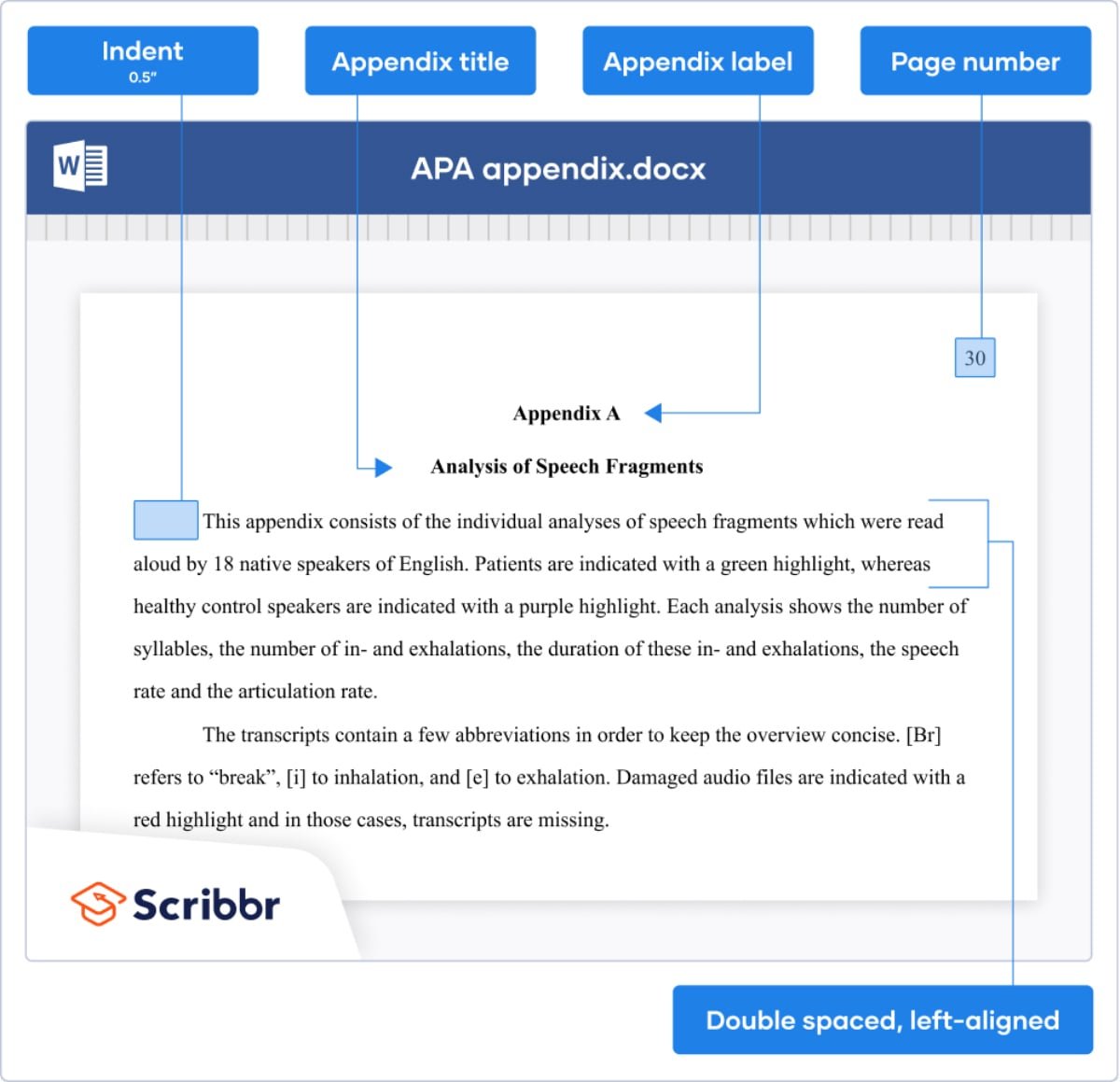
For maximum transparency, APA strongly recommends including the full text of all significant AI-generated content in separate appendices at the end of your paper. This allows readers to review the raw output alongside your analysis. When you refer to AI-generated content in your main text, you can then direct readers to the appropriate appendix:
(OpenAI, 2024; see Appendix A for the full transcript.)
This level of detail not only bolsters your academic integrity but also provides valuable context for your readers, allowing them to understand the AI's contribution fully.
Pinpointing Your AI Helper: Specific APA 7 Citation Formats
Beyond the general disclosure, APA provides specific formats for referencing AI-generated content in your reference list and in-text. These formats ensure consistency and clarity, treating AI output much like a personal communication or a software tool.
1. Citing AI Chat (e.g., ChatGPT)
When you're quoting or paraphrasing specific content generated from a chat session, treat it like a reference to a personal communication but with more detail, as the "conversation" is reproducible to some extent (if you preserve the chat log).
- Reference List Format:
AI Company Name. (year, month day). Title of chat in italics [Description, such as Generative AI chat]. Tool Name/Model. URL of the chat - Example: OpenAI. (2025, Oct 9). Differences between ChatGPT and Claude [Generative AI chat]. GPT-4o.
- Note on URL: Only include a direct URL to the specific chat if it is publicly available without a login. If a login is required (which is common), provide a general URL to the AI tool instead (e.g.,
https://chat.openai.com/). - In-Text Citation: (AI Company Name, year) or AI Company Name (year)
- Example: (OpenAI, 2025)
- Example with direct quote: OpenAI (2025) stated, "The key distinction lies in their underlying architectures and training data" (para. 2).
2. Citing AI Model (e.g., ChatGPT, Claude) as Software
Sometimes, you might refer to the AI model itself as a tool or software, rather than citing a specific chat output. This is useful when discussing the capabilities of the model generally.
- Reference List Format:
AI Company Name. (year). Tool Name/Model in Italics and Title Case [Description; e.g., Large language model]. URL of the tool - Examples:
- OpenAI. (2025). GPT-5 [Large language model].
https://openai.com/gpt-5/ - Anthropic. (2025). Claude-Sonnet-4.5 [Large language model].
https://www.anthropic.com/claude - In-Text Citation: (AI Company Name, year) or AI Company Name (year)
- Example: (OpenAI, 2025; Anthropic, 2025)
3. Visuals & Audio: What to Do When AI Creates Art or Sound
The landscape for AI-generated images, videos, and audio is still developing, and APA's specific guidelines are catching up. As of September 2024, APA has not published specific guidelines for AI-generated images or videos. However, the existing APA standards for citing figures, media, and software can be adapted.
Citing AI-Generated Images (e.g., DALL-E)
When you include an AI-generated image in your paper, you need to acknowledge its origin both in a caption below the image and in your reference list. For more detailed insights on this, you can explore guides on how to cite AI images effectively.
- Caption (directly below the image):
Note. Image generated using the prompt “Full text of prompt,” by OpenAI, DALL-E version number , Year (URL of AI Tool). - Important: Do not provide a direct link to the image itself, as AI-generated images are not typically static or publicly hosted. Instead, use the general URL of the AI tool that created it.
- Example Caption: Note. Image generated using the prompt “Create a comic-style colour illustration of the Vancouver, British Columbia skyline, with Science World prominently featured,” by OpenAI, DALL-E 3 , 2024 (
https://openai.com/index/dall-e-3/). - Reference List Entry (for the AI image generation model):
Author/Developer. (Year). Name of AI tool (Version) [AI image generation model]. URL - Example: Stability AI. (2024). Stable Diffusion XL [AI image generation model].
https://stability.ai/stable-diffusion
Citing AI-Generated Videos and Audio
Similar to images, specific APA guidelines for AI-generated videos and audio are still being developed. The following guidance is adapted from existing APA standards for citing multimedia.
- Reference List Format (Video):
Company or Creator of the Tool. (Year this version was released). Title of video [AI-generated video]. Name of the AI Tool or Model (version information if known) [Type of AI Model]. URL. - Example: HubSpot. (2024). Impact of stress on heart health [AI-generated video]. Clip Creator [Video generator].
https://www.hubspot.com/video-generator - Reference List Format (Audio):
Company or Creator of the Tool. (Year this version was released). Title of audio [AI-generated audio]. Name of the AI Tool or Model (version information if known) [Type of AI Model]. URL. - Example: ElevenLabs. (2024). Narrated history of space exploration [AI-generated audio]. ElevenLabs Voice AI [Speech generator].
https://beta.elevenlabs.io/ - In-Text Paraphrase: (Creator, Year)
- Example: (HubSpot, 2024)
- In-Text Quote (for audio/video clips): (Creator, Year, Time Stamp)
- Example: (HubSpot, 2024, 1:28)
The URL Conundrum: Linking to AI Output
A common question arises: do I provide a direct link to the AI-generated content? The answer depends on its accessibility:
- Publicly Available (No Login Required): If the AI-generated content (like a publicly shared chat transcript or an image on a platform that doesn't require an account) is directly accessible via a URL, then include that direct URL in your reference entry.
- Login Required: Most interactions with AI chatbots or image generators require you to log in. In such cases, the specific output URL isn't publicly shareable. Instead, include a general URL to the AI tool itself (e.g.,
https://chat.openai.com/for ChatGPT, orhttps://openai.com/dall-e-3/for DALL-E). This allows readers to locate the tool, even if they can't access your specific output.
Remember, the goal is to provide enough information for your reader to understand what tool was used and, where possible, to locate the source or recreate a similar output.
Beyond the Rules: Practical Tips for Responsible AI Use
While APA guidance provides the framework, responsible AI use in academic settings goes beyond simply following citation rules. It requires critical thinking and proactive engagement.
- Verify, Verify, Verify: AI models are prone to "hallucinations" – generating plausible-sounding but utterly false information. Never trust an AI output without independently verifying its facts, figures, and sources. Your academic credibility depends on it.
- Maintain Your Unique Voice: AI can be a great assistant, but it shouldn't replace your critical thinking or unique writing style. Use AI to augment, not to automate, your intellectual contribution. Ensure the final work reflects your voice, analysis, and understanding.
- Understand the "Black Box": Be aware that you don't fully understand how an AI model arrives at its answers. This makes human oversight and critical evaluation even more crucial.
- Consult Your Instructor (Seriously): This cannot be stressed enough. Policies on AI use vary wildly between institutions, departments, and even individual instructors. Always ask first if you plan to use AI, and follow their specific guidelines.
- Keep Meticulous Records: Save your prompts, the AI's full outputs, and any iterative changes you made. These records will be invaluable for your disclosure statements, appendices, and for demonstrating your process if questions arise.
- Consider Ethical Implications: Think about the biases inherent in AI models, the data they were trained on, and the potential for misuse. Responsible scholars engage with these broader ethical considerations.
Your AI Toolkit for Academic Success
The emergence of AI tools is transforming how we learn, research, and write. Rather than fearing this change, embrace it as an opportunity to enhance your academic skills, provided you do so transparently and ethically. The Official APA 7 Guidance on Citing AI-Generated Content isn't merely a set of rules; it's an invitation to become a more conscientious and effective scholar in the digital age.
By diligently applying these guidelines – disclosing your AI tools, citing them appropriately, and maintaining rigorous human oversight – you can leverage the power of AI to elevate your work while upholding the bedrock principles of academic integrity. Stay curious, stay transparent, and keep learning as this exciting field continues to evolve.